A Tuesday in the Good Future
What daily life looks like when AI has been harnessed, aligned, and shared. Told from a future we might actually reach.
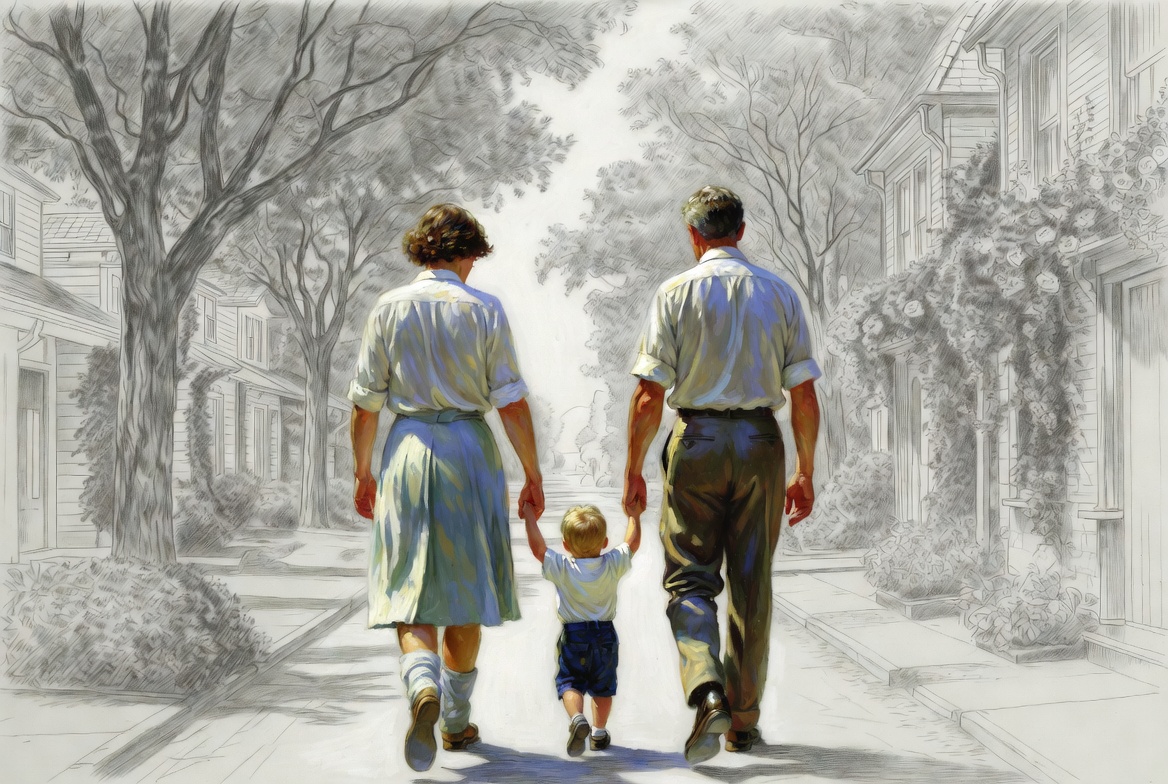
You wake up at 7:15 on a Tuesday in a year not far from now. You're healthy. Not in the vague, aspirational way people used to say it, but in the specific, measurable way: your biomarkers were checked overnight by a system that knows your genome, your history, and the latest research. If something was wrong, you'd know before you felt it.
You don't have a job in the way your parents understood the word. You have projects. One is a collaboration with three people in different countries on a ceramic glazing technique that produces colors no one has seen before. Another is a research question about migratory bird patterns that you've been thinking about for two years, working with an AI assistant that can process satellite data faster than any university department could a decade ago. You'll spend the morning on the ceramics. The afternoon is unscheduled.
This is the utopian future, told at the scale of a single day. It's worth imagining in detail because the arguments for and against AI's trajectory are usually conducted at the level of abstraction: GDP growth, unemployment rates, alignment risk percentages. Those numbers matter. But the question that drives most people's feelings about the future is simpler: what would a good day feel like?
The Material Baseline
The most visible change in the good future is that scarcity has a different shape.
Housing, food, healthcare, education, and energy are no longer expensive. They're not free, exactly, but the cost has dropped to the point where no one in a developed country worries about affording them. AI-optimized agriculture feeds more people on less land. AI-designed materials and construction methods have cut housing costs by more than half. Energy is abundant because AI accelerated the development of fusion and next-generation solar, and manages grid distribution with an efficiency that makes blackouts a memory.
Post-scarcityAn economic condition where goods and services are produced in sufficient abundance that most basic needs are met without requiring traditional labor. The term doesn't mean everything is free, but that the floor of material comfort has risen high enough that survival is no longer a competitive activity. doesn't mean everything is free. It means the floor has risen high enough that the relationship between labor and survival has been severed. You don't work to eat. You work because the work interests you, because you want to contribute something, because you'd be restless without a project. The economic base that supports this is a combination of AI-generated productivity, redistributive policy, and a cultural shift that took a painful decade to complete.
The transition was hard. The decade before this Tuesday involved layoffs, political upheaval, failed policy experiments, and real suffering for the workers and communities caught in the gap between the old economy and the new one. The good future didn't arrive painlessly. It arrived because enough people and institutions made choices that prioritized broad distribution of AI's benefits over concentration. That choice was contested at every step.
What People Do
When survival is handled, the texture of daily life changes in ways that are harder to predict than the economics.
The most common misunderstanding about the good future is that people stop working. They don't. They stop doing work they hate in exchange for money they need. The distinction matters because the human impulse to build, make, solve, and contribute doesn't disappear when the paycheck does. It redirects.
Some people spend years learning instruments they never had time for. Others build physical things with their hands: furniture, gardens, boats. A significant number turn to teaching, mentoring, or caregiving, roles that were always valuable and are now, for the first time, economically supported at a level that reflects their importance. Research hobbyists, people pursuing scientific questions out of curiosity rather than career pressure, have become a meaningful contributor to fields like ecology, astronomy, and local history.
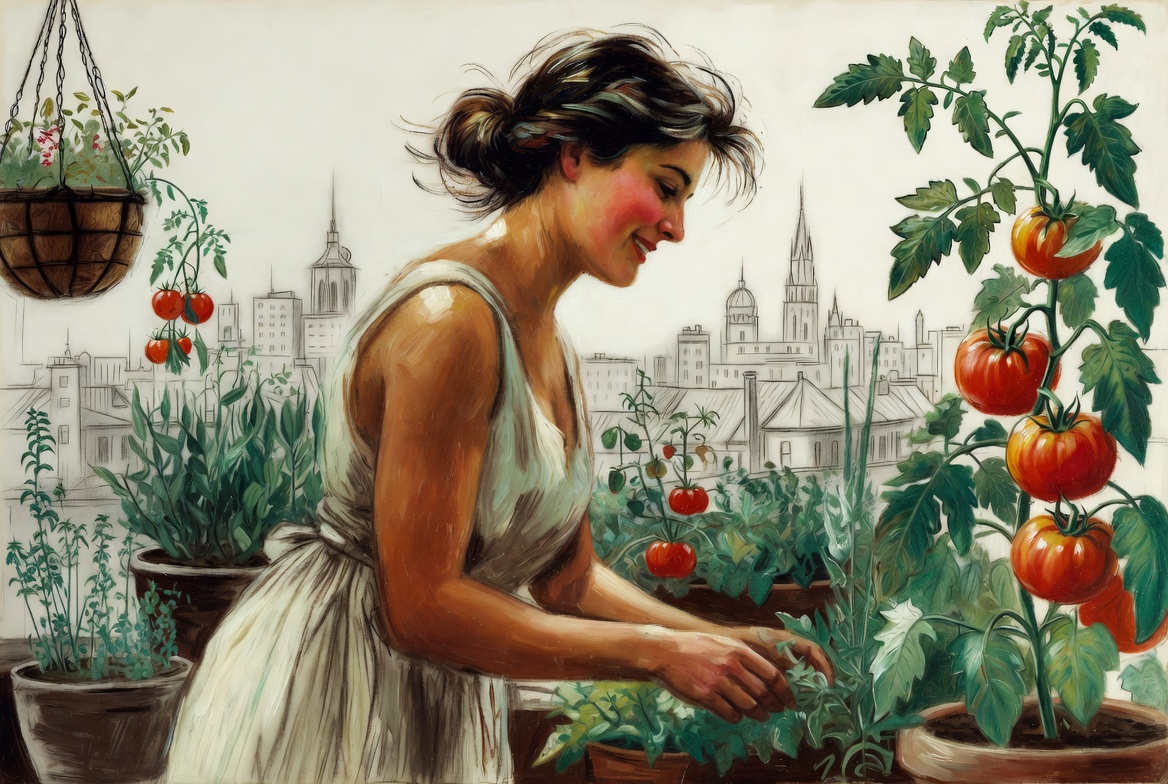
The rhythm of the week looks different. Without the five-day work structure, people organize time around projects, seasons, and relationships rather than employers. Some work intensely for three months and rest for one. Others maintain a daily rhythm of a few hours of focused activity followed by long stretches of unstructured time. The concept of a weekend has faded because the distinction it encoded, between obligated time and free time, no longer applies.
The Meaning Problem, Solved Differently
The hardest adjustment in the good future has nothing to do with economics. It's the question of why.
When survival no longer demands your attention, the question of what to do with your life becomes unavoidable. In the old economy, the question was often answered for you by circumstance: you worked because you had to, you raised children because they arrived, you retired because your body demanded it. In the good future, every phase of life is a choice, and choice, in unlimited quantities, can be paralyzing.
The first few years after the material transition were marked by a spike in depression and anxiety. Nick BostromSwedish-born philosopher at Oxford University, author of "Deep Utopia." He argues that even in a post-scarcity world, meaning must be actively constructed, and that freedom from necessity creates its own psychological challenges., the philosopher who coined the term superintelligenceAn AI system that exceeds the cognitive performance of humans in virtually all domains of interest, including scientific creativity, general wisdom, and social skills., wrote about this in his book on what he called "deep utopia": the challenge of constructing meaning when necessity has been removed. He argued that the structures humans built around work, religion, and family were partly coping mechanisms for scarcity, and that removing scarcity requires building new structures of meaning from scratch.
Over time, a cultural vocabulary developed for this transition. People talk about "finding your practice," meaning the activity or set of activities that gives your days shape. The practice carries no paycheck and no title. It's the thing you do when everything else is optional. For some, it's obvious: they always wanted to paint or research or build. For others, finding it takes years of experimentation. The culture has become more patient with that search because there's no economic penalty for taking the time.
Relationships in Abundance
When financial stress disappears, the dynamics of love, friendship, and family shift in unexpected directions.
Marriages last longer, on average, because people enter them without economic dependency. You don't stay with someone because you can't afford to leave. You stay because the relationship works. The flip side is that relationships face more scrutiny: without the binding pressure of shared financial survival, partnerships have to earn their continuation on emotional and interpersonal grounds alone. Some people find this liberating. Others find it exhausting.
Friendships deepen because people have time for them. The old complaint that adults struggle to maintain friendships largely evaporated once the 50-hour work week did. Communal living arrangements became more common, with groups of friends and families sharing large spaces designed for both privacy and shared life. The loneliness epidemic that defined the 2020s reversed, driven partly by design, partly by the simple fact that people were no longer too tired or too busy to show up for each other.
Parenting changed the most. With both parents free from full-time employment, children grow up with a level of parental presence and attention that previous generations could only associate with wealth. The anxiety that defined modern parenting, the fear that your child would fall behind, lose their chance, miss the window, faded as the competitive logic of scarcity dissolved. Children are raised to find their practice, to develop the capacity for sustained attention and intrinsic motivation, rather than to maximize their position in an economic hierarchy that no longer exists.
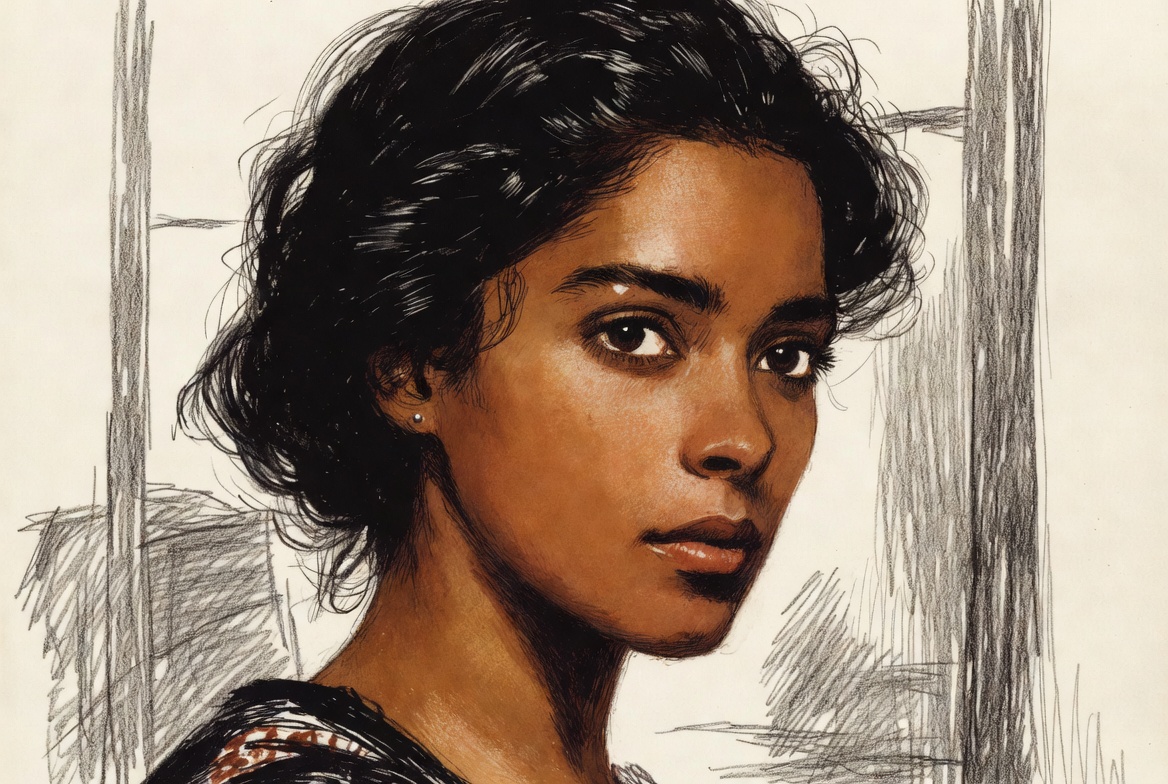
I spent twenty years coordinating freight shipments for a distribution company. Routes, schedules, exception handling, the same problems in different weather every day. When the AI took over logistics completely, I was 51 and terrified. I'd built my whole identity around being good at a job that no longer existed. The universal income covered my bills, but it didn't cover the hole where my purpose used to be.
A friend dragged me to a ceramics studio. I hated it at first. The clay didn't listen. There was no optimization, no right answer, no dashboard telling me I was performing well. It took about eight months before I made something I liked. A year before I made something I loved. Now I'm seven years in and I work at the wheel four or five hours a day. I've developed a glazing technique that produces these deep ocean-green colors by layering wood ash from specific species of trees.
The thing I didn't expect is that the satisfaction feels the same. The same focus, the same problem-solving, the same exhaustion at the end of a good day. My brain didn't care that the context changed. It cared that I was doing hard work that mattered to me. The logistics job gave me that by accident. The ceramics, I had to find on purpose. Harder to get there. Better once you arrive.
What Could Go Wrong Even Here
The honest version of utopia includes the problems that abundance creates.
Some people never find their practice. The freedom to do anything becomes, for them, the inability to commit to something. A persistent minority struggles with what psychologists have started calling "abundance depression," a condition where the absence of external structure produces a chronic low-grade purposelessness that resists treatment. The culture has resources for this, but it remains a real and ongoing challenge.
AI dependency is managed but not eliminated. The systems that run agriculture, energy, healthcare, and logistics are aligned and governed by transparent institutions, but they are also irreplaceable in the short term. A catastrophic failure in the AI infrastructure would be devastating, which means the utopian future still requires vigilance, maintenance, and the political will to fund safety research. The good future is maintained, not achieved.
Utopia is not a destination. It's a maintenance problem. The systems that create abundance require constant oversight, and the culture that sustains meaning requires constant renewal. The good future stays good only as long as people continue to care enough to keep it running.
Back to Tuesday
It's 4 PM. You've spent the morning at the ceramics studio and the early afternoon reading about bird migration routes with your AI research assistant.
Your daughter calls. She's 14 and working on a documentary about tide pools with two friends. They've been at it for months, interviewing marine biologists, filming in three locations, and learning to edit as they go. She wants to show you a rough cut tonight. You say yes.
Dinner is with neighbors, a rotating arrangement that started during the transition years and never stopped. Someone brings bread they baked. Someone else brings a dish they learned from an AI-curated cooking course on Oaxacan cuisine. The conversation ranges from the ceramics project to the latest results from a deep-space telescope, to a disagreement about whether the local council should fund a new community theater or expand the bike trail network.
It's ordinary. That's the point. The good future, if it arrives, will feel ordinary to the people living in it. The extraordinary part is getting there.
The Future Worth Building
This Tuesday is possible. Whether it arrives depends on decisions being made right now about how AI's benefits are shared, how its risks are governed, and how seriously we take the work of building meaning in a world that no longer forces it upon us. The good future requires imagination first. Then it requires effort.