What If You Never Had to Die?
The science of living long enough to live forever, and what that would actually feel like.

There is a concept in longevity research with a name that sounds like science fiction but describes something simple. Longevity escape velocity is the point where medicine extends your remaining life expectancy by more than a year for every year that passes. Once you cross that threshold, you stop aging toward death. You start outrunning it.
The idea was formalized by Aubrey de GreyBritish biogerontologist who coined the term "longevity escape velocity" and founded the LEV Foundation. He estimates a 50% chance of reaching LEV by the late 2030s., a biogerontologist who has spent two decades arguing that aging is an engineering problem, not an inevitability. His framework breaks aging into seven categories of cellular and molecular damage, each with its own repair strategy. Fix enough of them, fast enough, and you reach the velocity where each repair buys time for the next one.
For most of human history, this was philosophy. In the last five years, it has started to look like a research program with a timeline. The question is no longer whether radical life extension is theoretically possible. It's whether the people alive today might be the ones who experience it.
The Science Right Now
The evidence base for radical life extension is thin but growing fast, and the most important results are coming from combinations, not single interventions.
In 2025, researchers published results showing that rapamycinAn immunosuppressant drug originally used to prevent organ transplant rejection. At low doses, it has shown consistent lifespan extension in animal models by inhibiting the mTOR growth-signaling pathway. paired with the MEK inhibitor trametinib extended median lifespan by 27 to 29 percent in middle-aged mice of both sexes. That number is significant because it outperformed either drug alone, suggesting that attacking multiple aging pathways simultaneously produces effects that add up rather than overlap.
At the same time, the LEV Foundation's Robust Mouse RejuvenationA multi-intervention study testing whether combining several damage-repair therapies in middle-aged mice can achieve greater lifespan extension than any single therapy. The first study reported a "qualified win" in May 2025. project reported a qualified win in its first study. The premise: combine several damage-repair interventions in the same animal and measure whether the total effect exceeds what any single treatment achieves. Early data showed additive lifespan extension, meaning the interventions weren't canceling each other out. They were stacking.
The second phase of the Robust Mouse Rejuvenation project is expected to launch around mid-2026, with significant results available by 2028. If those results confirm that combined therapies can push mouse lifespans well beyond what single interventions achieve, the case for translating the approach to humans becomes much harder to dismiss.
Skeptics point to a legitimate concern: biology is layered. Fix one category of aging damage and another may emerge as the new bottleneck. The history of anti-aging research is littered with interventions that worked in isolation but failed to move the overall needle. What makes the current moment different is that researchers are finally testing combinations, and the early signal is that combinations work better than the sum of their parts.
The Timeline Question
If you're reading this in 2026, the honest answer about whether longevity escape velocity applies to you depends on your age and your tolerance for probability.
The concept of bridge therapiesExisting or near-term health interventions (exercise, nutrition, approved drugs like metformin or rapamycin) that aim to keep a person healthy long enough to benefit from more powerful future treatments. matters here. The idea is simple: you don't need the final cure for aging today. You need enough incremental health gains to stay alive and functional until the next breakthrough arrives. Each breakthrough buys time for the one after it. If the pace of breakthroughs accelerates, and there's reason to think it will given AI's growing role in biomedical research, then staying healthy for the next 15 to 20 years becomes the critical window.
De Grey estimates a 50% chance of reaching longevity escape velocity by the late 2030s. That number assumes adequate funding and political will. It also assumes the mouse rejuvenation data holds up and translates to humans without fundamental surprises. Those are big assumptions. But 50% odds on something this consequential are high enough to warrant planning for the possibility.
Year 80. Then Year 150.
Suppose it works. Suppose you reach longevity escape velocity and the medical machinery keeps pace. What does it feel like to be 150 years old with the body of a 40-year-old?
Start with identity. At 150, you've been a different person several times over. The psychological research on self-continuityThe sense that you are the same person over time. Studies show this sense weakens as the time horizon extends, and people imagining themselves at 200+ years report difficulty recognizing their future self as "them." suggests that humans already struggle to feel connected to their future selves across normal lifespans. At extreme lifespans, the person you were at 25 becomes as distant as a stranger. Your memories of that era are someone else's home movies.
Marriages, in their current form, become implausible. A 60-year partnership is already rare and demanding. A 120-year one asks two people to remain compatible through transformations that the current human lifespan never requires. The more likely pattern is serial deep partnerships, each lasting decades, separated by periods of reinvention. Divorce loses its stigma entirely when everyone lives long enough to outgrow multiple versions of themselves.
Career identity dissolves in a similar way. At 200, you might have held 15 different professions across fields that didn't exist when you started the previous one. The concept of retirement becomes meaningless, replaced by cycles of intense work and extended sabbatical. Education shifts from a front-loaded phase to a recurring need, something you return to every 20 or 30 years as entire industries and disciplines emerge and collapse.
The deepest change is this: death stops being the organizing principle of life. Every major human institution, from religion to insurance to inheritance law, assumes mortality. Remove that assumption and the architecture of meaning has to be rebuilt from the ground up.
The Society That Results
A world where people routinely live past 200 is structurally different from the one we know.
Stanford's Laura CarstensenDirector of the Stanford Center on Longevity. Her research focuses on how awareness of time horizons shapes motivation, emotion, and social behavior. She argues longevity will transform education, work, marriage, and financial planning., who directs the Stanford Center on Longevity, argues that extended lifespans will restructure every phase of life. Education, work, caregiving, and leisure will weave together across the lifespan rather than proceeding in the current rigid sequence. Multiple careers become the norm. Marriage at 25 carries different weight when it represents 5% of your expected life rather than 30%.
Inequality looms as the most serious risk. If longevity treatments are expensive and access is uneven, the result is a world split between those who age and those who don't. The wealthiest humans living centuries while everyone else lives 80 years would produce a class divide with no historical precedent. De Grey has argued that LEV therapies will become inexpensive because the economic incentive to make them widely available is overwhelming. Governments spend more treating age-related disease than almost anything else. Preventing those diseases saves trillions. Whether that economic logic translates into equitable access depends on political choices that haven't been made yet.
The Meaning Problem
The deepest question about radical life extension has nothing to do with biology. It's whether human beings can construct meaning without a deadline.
Every philosophical and religious tradition that addresses the good life does so against the backdrop of mortality. Urgency, purpose, sacrifice, legacy: these concepts draw their force from the fact that time runs out. If it doesn't, the emotional infrastructure of meaning needs a new foundation.
Research on motivation across the lifespan shows that as people approach their perceived end of life, they prioritize emotional meaning over information acquisition. They invest in close relationships, pursue experiences that feel significant, and let go of goals that no longer resonate. Remove the approaching end, and that motivational shift may never occur, or may occur repeatedly in cycles that mimic lifetimes within a lifetime.
The likely answer is that meaning becomes a practice rather than a given. In a mortal life, meaning often arrives uninvited through parenthood, crisis, approaching death. In an indefinite life, you'd have to cultivate it deliberately, choosing what to care about in 30-year arcs and accepting that each arc ends not because you die but because you've changed enough that the old purpose no longer fits. Some people will thrive under that freedom. Others will find it paralyzing.
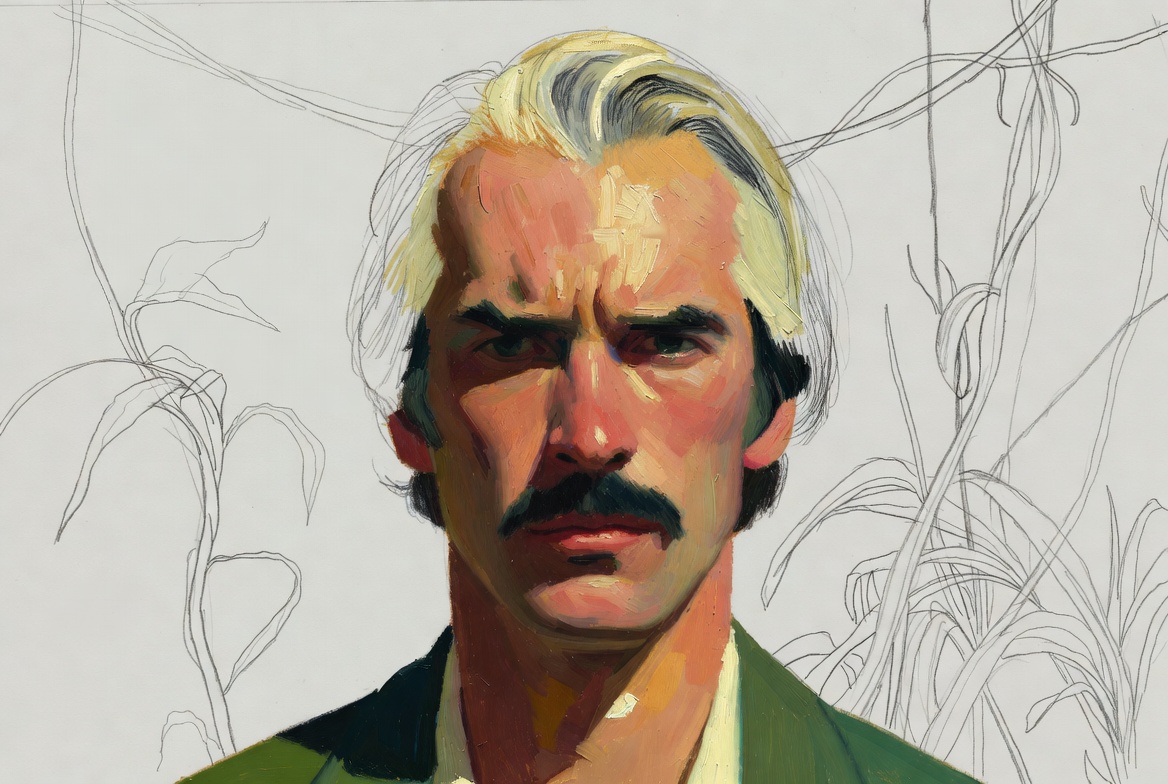
I taught biology for thirty-eight years. Cell division, mitosis, meiosis, the Hayflick limit. I taught my students that cells have a built-in expiration clock, and that the clock was the reason we get old and die. I believed that. It was in every textbook I assigned.
Two years ago my grandson sent me a paper on senolytic drugs clearing damaged cells in mice and restoring tissue function to something close to young. I read it three times. Then I read six more papers behind it. I spent thirty-eight years teaching a model of aging that's being rewritten right now, in real time, and the kids graduating this spring are going to live in a world where the limits I taught them might not apply.
My wife died at 68. Pancreatic cancer. I think about what it would mean if that generation of treatments had arrived ten years sooner. I can't think about it for very long. But I also can't pretend it doesn't matter. If there's even a small chance that the science catches up, the moral weight of funding it, of taking it seriously, is enormous. I'm 71. I probably won't be the one who benefits. But somebody's wife will be.
The Honest Forecast
Where does this actually stand?
The science of life extension is at an inflection point. Animal studies are producing real results, combination therapies are being tested for the first time, and AI is accelerating the discovery of new interventions. The LEV Foundation's next major study, launching in 2026, could produce data by 2028 that either validates or significantly undermines the escape velocity thesis.
The 50% probability estimate for reaching LEV by the late 2030s comes from the most optimistic credible source in the field. Mainstream gerontologists would put the number lower, perhaps 10 to 20 percent for that timeline, with higher confidence for later decades. The honest range for when radical life extension becomes available to the general public, if the science works, is somewhere between 2040 and 2070.
What's clear is that the people alive today are the first generation for whom this question is real rather than speculative. Whether you'll benefit from it depends on the next 15 years of funding decisions, regulatory choices, and biological results that haven't been published yet. The gap between a speculative possibility and a personal reality is closing. How fast it closes depends on how seriously the world takes the research that's already showing results.
The Longest Question
Every generation has lived with the assumption that life ends. The generation reading this might be the first that has to decide what to do if it doesn't. The science is early. The implications are not. They start the moment you take the possibility seriously.