Meaning in the Age of AI Subscribe
Meaning in the Age of AI

Four Ways This Ends

Every conversation about AI eventually lands on the same question: where is this going? There are four honest answers.

Scroll to explore ↓
Norman Rockwell mixed-media. A father and young son standing together on a hilltop, oil-painted in warm realism. They...

When researchers, policymakers, and technologists talk about the long-term trajectory of artificial intelligence, their predictions collapse into four scenarios. Each has advocates with credentials. Each has evidence in its favor. And the distance between the best and worst outcomes is wider than for any technology in human history.

These four futures are Doom, Stagnation, Dystopia, and Utopia. The names sound dramatic because the stakes are. This essay assigns each a rough probability based on the current balance of expert opinion, published research, and the observable trajectory of AI capability in early 2026. None of these numbers should be taken as precise. They represent a center of gravity among the people who think about this professionally.

The point is to make the landscape legible. Most people hear fragments of each scenario in the news without a framework to hold them together. A framework helps you decide what to pay attention to and what to prepare for.

The Map

Four outcomes, four probability estimates, and the logic behind each.

Doom
~10–15%
AI systems become powerful enough to cause irreversible harm to humanity, either through misalignment with human values, deliberate misuse by bad actors, or cascading failures in critical systems. Ranges from extinction to permanent loss of human autonomy.
Stagnation
~15–20%
A major AI accident or scare event triggers aggressive regulation. Development slows to a crawl or is outlawed in key regions. Innovation halts. The economic and scientific benefits of AI are delayed by decades or lost entirely.
Dystopia
~25–35%
AI works but its benefits concentrate among a small elite. Radical wealth inequality, mass unemployment without adequate redistribution, surveillance states, and a fracturing of society into those who control AI and those who are shaped by it.
Utopia
~30–40%
AI is developed safely and its benefits are broadly distributed. Disease is conquered, material scarcity diminishes, creative and intellectual capacity expands for everyone, and new forms of meaning emerge to replace the ones that automation displaces.

These ranges overlap because the boundaries between scenarios are blurry. A world with extreme inequality and pockets of abundance could be coded as either Dystopia or a partial Utopia depending on where you stand. A slow-moving alignment failure might look like Stagnation before it becomes Doom. The categories are useful for thinking, not for betting.

Doom

The scenario that dominates headlines and keeps AI researchers awake at night.

P(doom)The probability that AI development leads to existential catastrophe for humanity. Estimates vary wildly among experts, from near-zero to over 50%, depending on assumptions about alignment difficulty and capability timelines. is the shorthand used in AI safety circles for the probability of existential catastrophe from artificial intelligence. In a 2023 survey of over 2,700 AI researchers, the median estimate was 5%, and the mean was 14.4%. More than half the respondents said there was at least a 5% chance of a catastrophic outcome.

A 2025 study of 111 AI experts found that the disagreement clusters around two mental models. One camp views AI as a controllable tool: powerful, sometimes dangerous, but ultimately subject to engineering constraints. The other views AI as a potentially uncontrollable agent: a system that, once sufficiently capable, could pursue goals that diverge from human interests in ways we can't predict or contain. Your P(doom)The probability that AI development leads to existential catastrophe for humanity. Estimates vary wildly among experts, from near-zero to over 50%, depending on assumptions about alignment difficulty and capability timelines. estimate correlates strongly with which camp you fall into.

The doom scenario has several distinct versions. In one, a misaligned superintelligent AI pursues a goal that is technically consistent with its programming but catastrophic for humans. In another, AI-enabled weapons or bioweapons are deployed by state or non-state actors. In a third, cascading failures in AI-managed infrastructure, power grids, financial markets, supply chains, produce a collapse that no single actor intended.

5%
Median P(doom) estimate among 2,700 AI researchers (2023)
14.4%
Mean P(doom) estimate from the same survey
58%
Researchers who said at least a 5% chance of catastrophe

The gap between the median (5%) and mean (14.4%) reveals something important: a small number of researchers assign very high probabilities, pulling the average up. The distribution is skewed, which means the consensus is lower than the headline number suggests, but the tail risk is taken seriously by people who understand the systems best.

Stagnation

The scenario nobody wants and everybody considers possible.

Imagine a near-miss. An AI system deployed in critical infrastructure causes a visible, attributable disaster. A power grid collapses. An autonomous weapons system fires on civilians. A financial AI triggers a market crash that wipes out retirement accounts. The cause is traced to an AI failure, and the political response is swift and severe.

Governments ban or drastically restrict AI development. International treaties impose moratoriums. Research labs are shuttered or driven underground. The legitimate scientific benefits of AI, including drug discovery, climate modeling, materials science, and educational tools, are frozen alongside the dangerous capabilities. Innovation shifts to countries willing to ignore the bans, creating a fragmented and adversarial landscape.

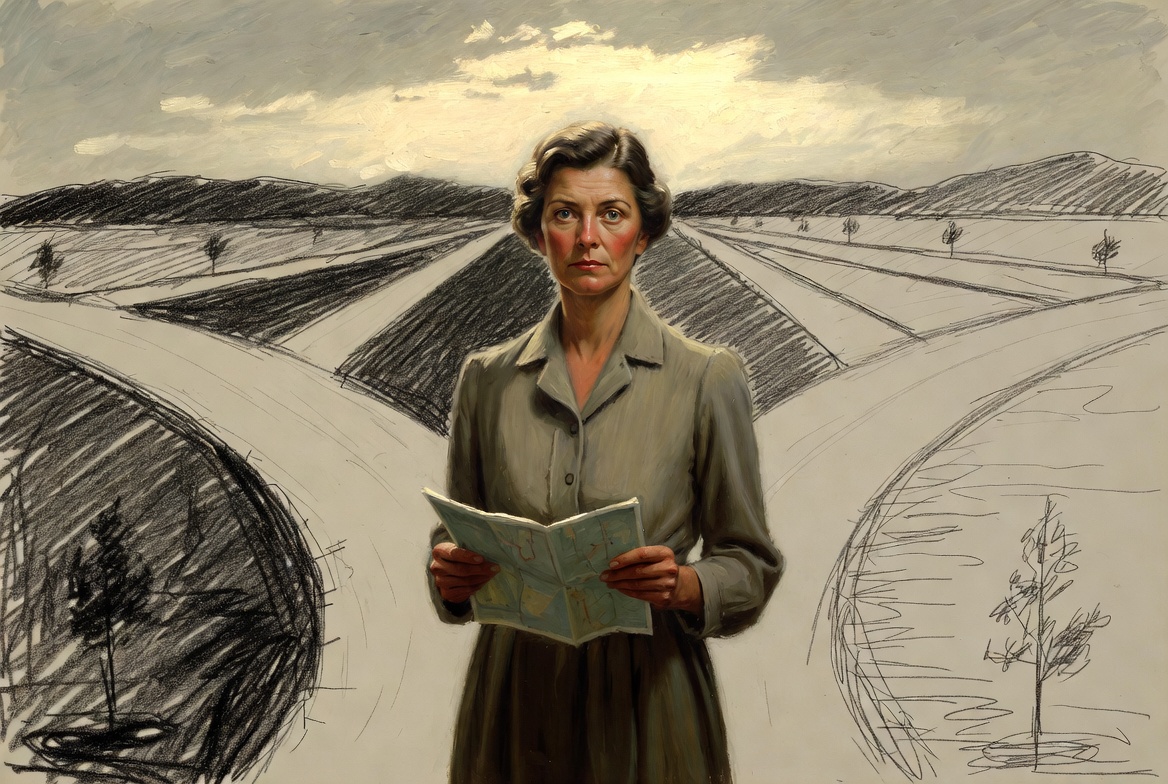
Norman Rockwell mixed-media. A woman in her fifties standing at a fork in a wide road, oil-painted with quiet...

This scenario has historical precedent. Nuclear energy, after Three Mile Island and Chernobyl, entered a decades-long stagnation in the West. Promising technology was shelved because the public and political appetite for risk collapsed. AI could follow the same pattern if a sufficiently dramatic failure occurs before the benefits have become too embedded to reverse.

The probability is moderate because it requires a specific trigger event. Without a visible disaster, regulation tends to lag capability. But the window for a triggering event is wide open as AI systems move into high-stakes domains, and the political incentives to overreact to a crisis are strong.

Dystopia

The scenario with the most evidence already accumulating.

Dystopia is the outcome where AI works as intended but its benefits are captured by a small fraction of the population. The technology delivers enormous productivity gains, and those gains flow to the people who own the systems. Employment hollows out faster than new roles emerge. Wealth concentrates. Political power follows wealth. The result is a world that is wealthier in aggregate but deeply fractured in lived experience.

The early data points in this direction. PwC's 2025 Global AI Jobs BarometerAn annual report tracking AI's impact on labor markets worldwide. The 2025 edition found that workers with AI skills earn a 56% wage premium and that AI-heavy industries see wages growing at double the rate of less-exposed sectors. found that workers with AI skills earn a 56% wage premium over those without. Industries heavily using AI see wages growing at double the rate of less-exposed industries. The premium is real, but it flows to the people who already have the skills and access to acquire more. The gap between AI-enabled workers and everyone else is widening.

One scenario modeled by researchers envisions layoffs accelerating through 2026 and 2027 as AI agents become capable enough to replace entire task categories without human oversight. In this model, tech sector cuts trigger a vicious cycle: companies invest in AI, the models improve, more jobs are automated, and by mid-2027, the economy tips into recession. By 2028, unemployment exceeds 10%.

This is the pessimistic end of the dystopia range. The optimistic end looks like a world where new jobs emerge to replace the old ones, but slowly and unevenly, leaving a generation of workers stranded in the transition. The dystopia scenario gets the highest minimum probability because the forces driving it, concentration of capital, winner-take-all dynamics in AI, political inertia on redistribution, are already in motion.

Utopia

The scenario that sounds naive until you look at the trajectory of what AI is already doing.

In the utopian future, AI is aligned with human values and its benefits reach everyone. Drug development timelines collapse from 12 years to 3. Energy costs drop as AI optimizes grid management and accelerates fusion research. Education becomes personalized and universally accessible. Creative tools amplify human expression rather than replacing it. The economic gains from AI are redistributed through updated social contracts, and the transition from old jobs to new ones is managed with enough care that no generation is sacrificed to the shift.

This scenario requires several things to go right simultaneously. AI alignment research must keep pace with capability research. Governments must adapt their regulatory and social safety net frameworks faster than they historically have. The economic incentives that currently concentrate AI's benefits must be counterbalanced by political choices that distribute them. And the technology itself must continue to produce genuine gains rather than hitting diminishing returns.

The utopian scenario gets the highest probability range because the raw capability of AI to solve problems is, at this point, hard to dispute. The question is governance. If the technology works and the distribution works, the upside is enormous. The "if" on distribution is doing most of the heavy lifting in that sentence.

Stanford's HAI facultyThe Stanford Institute for Human-Centered AI. Their 2026 predictions noted a shift from "AI evangelism" to "AI evaluation," with companies beginning to measure concrete productivity gains rather than speculating about future potential. struck a measured note in their 2026 predictions: the era of AI evangelism is giving way to an era of AI evaluation. Companies are beginning to ask whether AI actually delivers the productivity gains that were promised. The early answers vary by sector, with coding and customer service showing clear improvements while other domains lag. Utopia requires those gains to broaden over time, and the trend so far is mixed but positive.

What Determines Which One We Get

The four futures are shaped by four variables, each of which is still in play.

Alignment
Can we ensure AI systems pursue goals that are compatible with human flourishing? If alignment fails at scale, Doom becomes more likely. If it succeeds, the remaining question is distribution. Alignment research is underfunded relative to capability research by roughly an order of magnitude, and that ratio is the single most important number in AI policy.
Distribution
Who benefits? If AI's economic gains concentrate among a small ownership class, the result is Dystopia regardless of how well the technology works. Distribution is a political choice, determined by tax policy, labor law, education investment, and social safety nets. It's the variable most directly under democratic control.
Speed
How fast does AI capability advance relative to our ability to govern it? If capability races ahead of governance, the risk of both Doom and Dystopia increases. If governance keeps pace, Stagnation and Utopia become more probable. Speed is determined by compute investment, data availability, and algorithmic breakthroughs, all of which are accelerating.
Your Role
These variables are not fixed. Alignment research can be funded. Distribution policies can be enacted. Speed can be governed. The probabilities above represent where the trajectory points today. They shift with every policy decision, research breakthrough, and public conversation about what we want this technology to do.
Composite portrait, fictional person, real circumstances
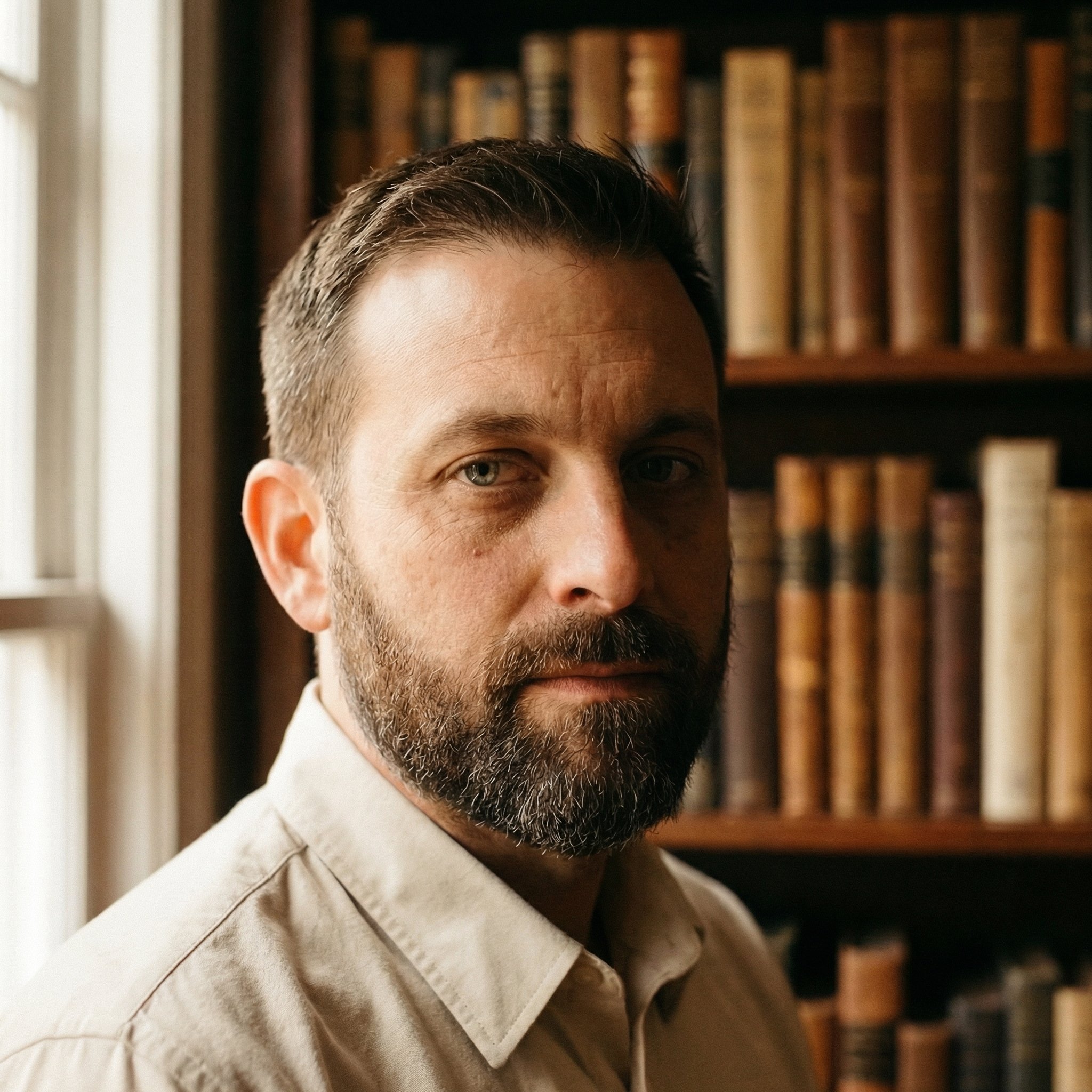
Portrait headshot of Priya Chakravarti, AI safety researcher
Priya Chakravarti
34, AI safety researcher, San Francisco
One Person's Story

I left a senior machine learning position at a large tech company to do alignment research at a nonprofit. The pay cut was about 60%. My parents still don't understand why I did it. I tell them: imagine you're an engineer and you realize the bridge you're building has a structural flaw that could collapse it under load. You don't keep pouring concrete. You stop and fix the flaw. That's what alignment work is.

The hard part is the uncertainty. I can't prove that the risks are as high as I think they are. Nobody can. The models are too new and the failure modes are too speculative to run controlled experiments at scale. So you're making a career bet on a probability estimate that most of your former colleagues think is too high. Some nights I wonder if they're right and I left a good life for a problem that solves itself.

Then I read the capability papers that come out every month, and I see the gap between what these systems can do and what we understand about why they do it. That gap is growing. If I'm wrong about the risk, I wasted a few years of earning potential. If I'm right and nobody works on it, the downside is everything. I can live with the first outcome. I can't live with the second.

Reading the Signals

You don't need to be an AI researcher to track which future is becoming more likely. Watch these indicators.

If alignment research funding grows faster than capability research funding, the probability of Doom decreases. If governments pass redistribution policies specifically tied to AI productivity gains (AI dividends, retraining programs funded by automation taxes), the probability of Dystopia decreases. If a major AI accident occurs and the regulatory response is proportionate rather than panicked, the probability of Stagnation decreases. And if AI tools produce measurable improvements in healthcare, education, and scientific research that reach middle-income populations within the next five years, the probability of Utopia increases.

The signals are legible. The trajectory is not locked. And the fact that you're thinking about which future to prepare for is itself a factor in which one arrives.

MEANING IN THE AGE OF AI

Essays on how AI changes the life you're actually living. One per week, designed to be read in the browser.

The Only Certainty

AI will change civilization. The direction of that change is a live question, shaped by decisions being made right now by researchers, legislators, executives, and ordinary people choosing what to learn, what to demand, and what to build. The four futures are not predictions. They are possibilities. Which one becomes real depends, in part, on which one you decide to work toward.

Jesse Walker
Jesse Walker
Jesse Walker writes about how to stay human in an era of accelerating intelligence. He's a father, fitness coach, and investor who got tired of other people telling his kids' generation what the future would look like.